Diabetes
Is Quiet Nerves Safe If You Have Diabetes? Questions to Ask Your Care Team
Quick answer
Ask your doctor first. Alpha lipoic acid can lower blood sugar with insulin or diabetes pills, coenzyme Q10 may interact with insulin, and butcher's broom is not advised for people with diabetes. Quiet Nerves publishes no amounts, so your doctor cannot judge the strength. It does not replace diabetes care.
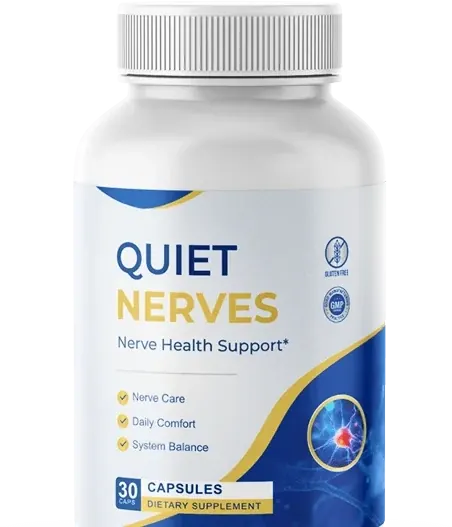
Diabetes is the leading cause of nerve damage in the US, so many readers who look at Quiet Nerves live with it. That makes the safety question sharper for them than for anyone else.
This post goes through the four diabetes-related cautions tied to the six named ingredients. It also lists questions to take to an appointment. It is not medical advice, and your own care team knows your medicines best.
Key facts
- Alpha lipoic acid may lower blood sugar when used with insulin or diabetes pills.
- Butcher's broom is not advised for people with diabetes, after one reported case of ketoacidosis.
- Coenzyme Q10 may interact with insulin.
- Metformin might lower vitamin B12, and Quiet Nerves contains none.
- As many as half of people with diabetes have peripheral neuropathy.
- Quiet Nerves does not replace blood sugar control, foot care or any prescribed treatment.
Context
Why is diabetes at the center of this question?
Years of high blood sugar can damage nerves and the small vessels that feed them. As many as half of people with diabetes develop peripheral neuropathy (NIDDK, diabetic peripheral neuropathy). Most of the research on the six ingredients was done in people with type 2 diabetes who already had nerve damage.
That has two effects. First, the studies speak to a narrow group. Second, the cautions matter most to the same group, because they use medicines that the ingredients can touch.
Cautions
Which Quiet Nerves ingredients need a diabetes check?
| Ingredient | Caution | Source |
|---|---|---|
| Alpha lipoic acid | Blood sugar may drop too far when used with insulin or diabetes pills | (Linus Pauling Institute, lipoic acid) |
| Butcher's broom | Advised against for people with diabetes, after a reported ketoacidosis case | (MSK, butcher's broom) |
| Coenzyme Q10 | May interact with insulin | (NCCIH, coenzyme Q10) |
| Turmeric | A nano-curcumin trial in type 2 diabetes saw lower blood sugar as well as lower neuropathy scores | (Asadi et al., 2019) |
| Magnesium | Weak kidneys clear it slowly, so mention any kidney disease | (NIH ODS, magnesium) |
Blood sugar
What can alpha lipoic acid do to blood sugar?
It may lower it. Those on insulin or diabetes pills may drop too low (Linus Pauling Institute, lipoic acid). Rarely, alpha lipoic acid has triggered insulin autoimmune syndrome, which causes repeated, severe lows. The evidence is case reports. In one, a 56-year-old woman took 600 mg a day for two weeks and then needed steroid treatment (Veltroni et al., 2018).
Butcher's broom
Why is butcher's broom the easy one to overlook?
It is a leg-vein herb. Its trials measured swollen, heavy legs, not nerves. Memorial Sloan Kettering tells people with diabetes to avoid it, citing a reported case of diabetic ketoacidosis, a dangerous build-up of blood acids (MSK, butcher's broom).
The brand does not say how much of it is in a capsule. For many readers this one caution is enough to wait for a doctor's go-ahead.
Metformin
What about metformin and vitamin B12?
Metformin might cut the B12 the body absorbs, and a low level can leave hands and feet numb or tingly (NIH ODS, vitamin B12). The numbness you want to ease may be a B12 problem.
B12 is not one of the six names. A B12 blood test could tell you more than any capsule can. Do not stop metformin or any prescription on your own.
Feet
What should your daily routine include no matter what you take?
Look at your feet every day, since numb feet may not feel a cut or a stone in the shoe. Wash in lukewarm water, testing it with your elbow first. Dry well between the toes. Never go barefoot. Call your doctor about any cut, sore, blister or red, swollen skin that is not healing (NIDDK, diabetic peripheral neuropathy).
Holding blood glucose, blood pressure and cholesterol in range helps guard against nerve damage. A supplement sits behind these habits and not in front of them.
Appointment
What should you ask your care team?
- Do any of the six ingredients clash with my diabetes medicines?
- Should I avoid butcher's broom, given my diabetes?
- How often should I check my blood sugar if I start a capsule with alpha lipoic acid?
- Should I have a vitamin B12 test, especially on metformin?
- Do my kidneys allow a product with magnesium?
- If I try it, what end date and what warning signs should I set?
Take the bottle, or a photo of its label, with you. Tell your doctor that amounts are not published.
FAQ
Frequently asked questions
Is Quiet Nerves safe for people with diabetes?
Ask your doctor first. Alpha lipoic acid may lower blood sugar alongside diabetes medicine, and butcher's broom is advised against for people with diabetes.
Can I take Quiet Nerves with insulin?
Only with your doctor's approval. Alpha lipoic acid may push blood sugar too low, and CoQ10 may interact with insulin.
Can I take Quiet Nerves with metformin?
Ask your doctor. Metformin can lower vitamin B12, and Quiet Nerves contains no B12.
Does Quiet Nerves treat diabetic neuropathy?
No. It is a supplement. It does not treat neuropathy, nerve pain or diabetes.
Why is butcher's broom a concern?
Memorial Sloan Kettering tells people with diabetes to avoid it, after one reported ketoacidosis case.
Should I stop my diabetes medicine if I use it?
No. Do not drop a prescribed medicine on your own. Quiet Nerves is not a stand-in for diabetes care.
Sources
Which sources does this post rely on?
Each source below is one that the Quiet Nerves site already cites. The links open the original pages.
- NIDDK, diabetic peripheral neuropathy. National Institute of Diabetes and Digestive and Kidney Diseases. Peripheral Neuropathy. Last reviewed February 2018.
- Linus Pauling Institute, lipoic acid. Higdon J, Delage B. Lipoic Acid. Linus Pauling Institute, Oregon State University. Updated October 2018; reviewed January 2019.
- Veltroni et al., 2018. Veltroni A, et al. Autoimmune hypoglycaemia caused by alpha-lipoic acid: a rare condition in Caucasian patients. Endocrinol Diabetes Metab Case Rep. 2018.
- MSK, butcher's broom. Memorial Sloan Kettering Cancer Center. About Herbs: Butcher's Broom. Updated April 13, 2023.
- NCCIH, coenzyme Q10. National Center for Complementary and Integrative Health. Coenzyme Q10. Last updated January 2019.
- Asadi et al., 2019. Asadi S, et al. Nano curcumin supplementation reduced the severity of diabetic sensorimotor polyneuropathy in patients with type 2 diabetes mellitus. Complement Ther Med. 2019;43:253-260.
- NIH ODS, vitamin B12. NIH Office of Dietary Supplements. Vitamin B12: Fact Sheet for Consumers. Updated December 15, 2023.
- NIH ODS, magnesium. NIH Office of Dietary Supplements. Magnesium: Fact Sheet for Health Professionals. Updated January 6, 2026.
Our view
Our view
For someone with diabetes, three of the six ingredients call for a conversation before the first capsule. That is not a reason for alarm. It is a reason to book ten minutes with a doctor or pharmacist and bring the ingredient list.
We would not suggest Quiet Nerves as a first step for diabetic nerve symptoms. The daily basics and the doctor's plan come first. If your care team clears it, treat the capsule as a time-limited trial and keep the log.
Last updated . Written by the Quiet Nerves Editorial Desk at Goquietnerves. Medically reviewed by Dr. Eric Roberts, DPM, Podiatrist. This is general information, not medical advice. Quiet Nerves is a dietary supplement, not FDA approved, and not a treatment for neuropathy or any disease. Ask your own doctor or pharmacist about your own health and medicines.