Official product information
Quiet Nerves Ingredients: The Six Named in the Formula
Quick answer
Quiet Nerves is made with six ingredients: magnesium glycinate, alpha lipoic acid, butcher's broom, L-carnitine, turmeric and coenzyme Q10.
The turmeric is a 95% curcuminoid extract. Each ingredient has its own human studies, and the brand does not print an amount for each one.
Next, see what the label shows.

The formula
What ingredients are in Quiet Nerves?
Quiet Nerves names six ingredients: one mineral, two antioxidants, one amino acid relative and two plant extracts. The brand gives no amount for any of them, and no Supplement Facts panel has been shown.
- Magnesium glycinate
- Mineral (Magnesium bisglycinate). Amount: not published
- Alpha lipoic acid
- Antioxidant (Thioctic acid). Amount: not published
- Butcher's broom
- Botanical (Ruscus aculeatus). Amount: not published
- L-carnitine
- Amino acid derivative (L-carnitine). Amount: not published
- Turmeric (95% curcuminoids)
- Botanical (Curcuma longa). Amount: not published
- Coenzyme Q10
- Antioxidant (Ubiquinone). Amount: not published
Each section below covers what the ingredient is, what studies found and what to watch for. The Quiet Nerves Supplement Facts page explains what a full label would add.
Mineral
Magnesium glycinate: what is it, and does it help nerves?
Magnesium glycinate is magnesium bound to glycine, an amino acid. Its nerve research is the thinnest of the six.

What it is
Your body uses magnesium in muscles, nerves, bones and blood sugar control. Adults need 310 to 420 mg a day from all sources (NIH ODS, magnesium).
What human studies found
A study of 978 adults with type 2 diabetes linked low blood magnesium to weaker nerve signals, but no one took a supplement (Chu et al., 2016). A small 8-week trial of 300 mg magnesium citrate a day did not show a clear gain over placebo (Ranjbar Arani et al., 2026).
Safety notes
Supplement magnesium has an adult upper limit of 350 mg a day, and large doses often cause diarrhea.
Antioxidant
Alpha lipoic acid: what is it, and what doses did trials use?
Alpha lipoic acid, also called thioctic acid, is an antioxidant the body makes in small amounts. It is the best-studied of the six for diabetic nerve symptoms.

What human studies used and found
The SYDNEY 2 trial gave 181 people with diabetic nerve damage 600, 1,200 or 1,800 mg by mouth once a day for 5 weeks. All three doses cut symptom scores more than placebo, and 600 mg did as well as the higher doses (Ziegler et al., 2006).
A four-trial review found a clear benefit from ALA given by IV drip, but gains from ALA by mouth were of unclear value (Mijnhout et al., 2012).
Safety notes
Nausea, vomiting and dizziness rose with the higher doses in SYDNEY 2. With insulin or diabetes pills, ALA may push blood sugar too low (Linus Pauling Institute, lipoic acid), and case reports link it to a rare autoimmune cause of low blood sugar (Veltroni et al., 2018).
Botanical
Butcher's broom: why is a leg vein herb in a nerve formula?
The brand does not say, but butcher's broom (Ruscus aculeatus) most likely backs its circulation line. The root extract of this small shrub has been studied for leg veins, not nerves.

What human studies used and found
In a 12-week trial of 148 women with chronic venous insufficiency, a Ruscus extract shrank lower leg volume and eased heavy, tired legs more than placebo (Vanscheidt et al., 2002). A pooled look at 31 trials of a combination product, with 150 mg Ruscus extract per capsule, found modest drops in leg pain, cramps and heaviness (Boyle et al., 2003).
Safety notes
Memorial Sloan Kettering advises people with diabetes not to take it, after a reported case of diabetic ketoacidosis (MSK, butcher's broom). That matters, since diabetes is the leading US cause of nerve damage (NINDS, peripheral neuropathy).
Amino acid derivative
L-carnitine: is it the same as the acetyl-L-carnitine in nerve trials?
No. The brand names L-carnitine, but the nerve trials used acetyl-L-carnitine, a related form, so their results cannot simply carry over.

What it is
Carnitine helps carry fats into the parts of cells that burn them for energy. The body makes its own, and animal foods add more (NIH ODS, carnitine).
What human studies used and found
Two year-long trials gave 500 or 1,000 mg of acetyl-L-carnitine three times a day. The higher dose eased pain where pain was the main complaint and improved vibration sense, but nerve conduction did not change (Sima et al., 2005). Cochrane rated the evidence very uncertain (Rolim et al., 2019 (Cochrane)), and another review noted most trials were maker funded (Li et al., 2015).
Safety notes
Near 3 grams a day, carnitine can cause nausea, diarrhea and a fishy body odor.
| Point | L-carnitine | Acetyl-L-carnitine |
|---|---|---|
| Named on the Quiet Nerves list | Yes | No |
| Diabetic nerve trials found | None | Yes, 1,500 to 3,000 mg a day for up to 52 weeks |
| Can trial results be assumed? | No | Only for this form |
Botanical
Turmeric at 95% curcuminoids: how does it differ from the curcumin in the nerve trial?
The info page says the turmeric is standardized to 95% curcuminoids, the root's yellow compounds. The one nerve trial found used nano-curcumin, a high-absorption form.

What human studies used and found
In an 8-week trial, 80 people with type 2 diabetes took 80 mg of nano-curcumin or a placebo. The curcumin group ended with lower neuropathy scores and lower blood sugar (Asadi et al., 2019). No nerve trial of a standard 95% extract was found.
| Point | 95% curcuminoid extract | Nano-curcumin |
|---|---|---|
| What it is | Root extract, mostly curcuminoids | Tiny particles made to absorb better |
| In Quiet Nerves | Yes, per the info page | Not stated |
| Nerve trials found | None | One small trial, 80 mg for 8 weeks |
Safety notes
Federal experts find too little evidence that curcumin helps any condition, and note liver injury reports with high-absorption products (NCCIH, turmeric). Turmeric may also raise bleeding risk with warfarin or other blood thinners (MSK, turmeric).
Antioxidant
Coenzyme Q10: what did the one nerve trial find?
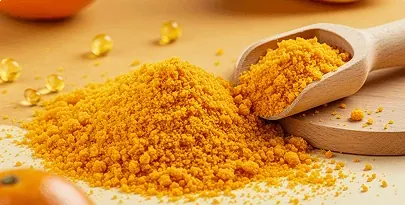
Coenzyme Q10, or ubiquinone, is an antioxidant your body makes and uses to produce energy in cells. One small trial has tested it in diabetic nerve damage.
What human studies used and found
In that trial, 49 people with type 2 diabetes took 400 mg a day or a placebo for 12 weeks. Symptom scores and some nerve signal tests improved in the CoQ10 group, with no drug-related side effects (Hernandez-Ojeda et al., 2012). The summary mostly compares people with their own starting scores, not with placebo.
Safety notes
Side effects are usually mild, such as poor sleep or an upset stomach. CoQ10 may interact with warfarin and with insulin (NCCIH, coenzyme Q10).
Dose check
How much of each ingredient does Quiet Nerves contain?
Nobody outside the company knows. Every bar stays empty because no amount is published; each note gives the dose used in human studies.
Label: not published. Studied: no proven nerve dose; supplement upper limit 350 mg. (NIH ODS, magnesium)
Label: not published. Studied: 600 mg a day by mouth (SYDNEY 2). (Ziegler et al., 2006)
Label: not published. Studied: studied for leg veins only. (Vanscheidt et al., 2002)
Label: not published. Studied: trials used acetyl-L-carnitine, 1,500-3,000 mg. (Sima et al., 2005) (Rolim et al., 2019 (Cochrane))
Label: not published. Studied: 80 mg nano-curcumin (one small trial). (Asadi et al., 2019)
Label: not published. Studied: 400 mg a day (one small trial). (Hernandez-Ojeda et al., 2012)
Summary
Quiet Nerves ingredients side by side: the summary table
This table sets the six side by side, from type to studied dose. The last column is our plain reading of the sources cited above.
| Ingredient | Type | Studied for | Studied dose and length | Nerve evidence |
|---|---|---|---|---|
| Magnesium glycinate | Mineral | Diabetic nerve symptoms (citrate form) | 300 mg a day, 8 weeks | Weak |
| Alpha lipoic acid | Antioxidant | Diabetic nerve symptoms | 600 mg a day by mouth, 5 weeks | Clearest by IV; unclear by mouth |
| Butcher's broom | Botanical | Leg veins | Ruscus extract, 12 weeks | None for nerves |
| L-carnitine | Amino acid derivative | Nerve pain, as acetyl-L-carnitine | 1,500 to 3,000 mg a day, up to 52 weeks | Very uncertain; other form |
| Turmeric (95% curcuminoids) | Botanical | Diabetic nerve symptoms, as nano-curcumin | 80 mg, 8 weeks | One small trial; other form |
| Coenzyme Q10 | Antioxidant | Diabetic nerve symptoms | 400 mg a day, 12 weeks | One small trial |
Medicine checks for all six are on the Quiet Nerves side effects page. To see how they are meant to work together, read how Quiet Nerves works or our ingredients vs research article.
FAQ
Quiet Nerves ingredients FAQ
How many ingredients are in Quiet Nerves?
Six: magnesium glycinate, alpha lipoic acid, butcher's broom, L-carnitine, turmeric at 95% curcuminoids, and coenzyme Q10. Other ingredients are not published.
How much alpha lipoic acid is in Quiet Nerves?
Not published. In the SYDNEY 2 trial, 600 mg a day by mouth worked as well as higher doses.
Is the L-carnitine in Quiet Nerves the same as in nerve studies?
No. The nerve trials used acetyl-L-carnitine at 1,500 to 3,000 mg a day, a different form.
Does Quiet Nerves use nano-curcumin?
Nothing published says so. The info page describes turmeric at 95% curcuminoids, a standard extract, while the one nerve trial found used nano-curcumin.
Why does Quiet Nerves contain butcher's broom?
The brand does not say. Its research covers leg vein symptoms, which fits the circulation line. People with diabetes should read the safety note above first.
Has Quiet Nerves itself been tested in a study?
No study of the product or of this six-ingredient mix was found. Every result here comes from single-ingredient research.