Quiet Nerves Blog
Quiet Nerves Ingredients: All Six, With No Amounts, vs the Research
Quick answer
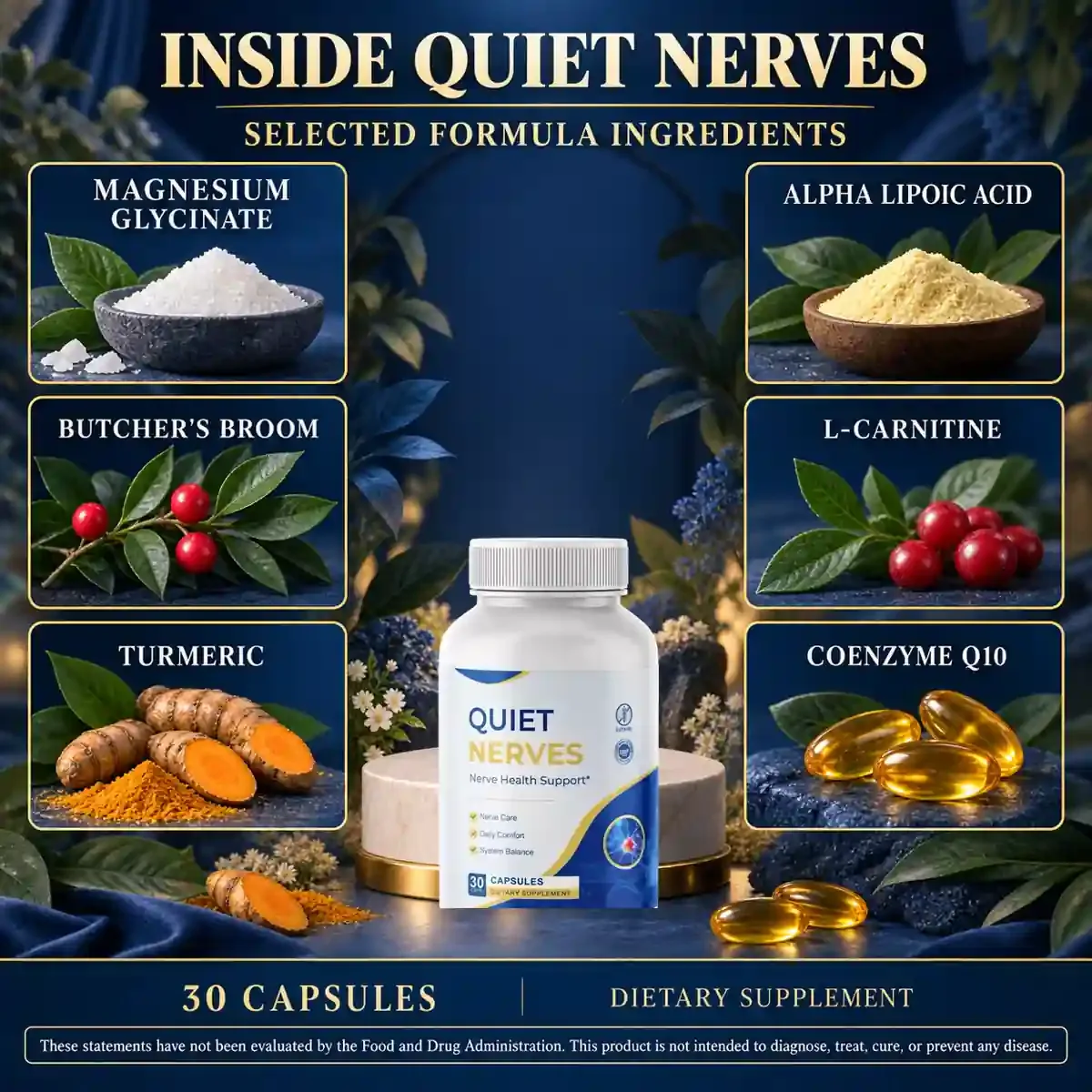
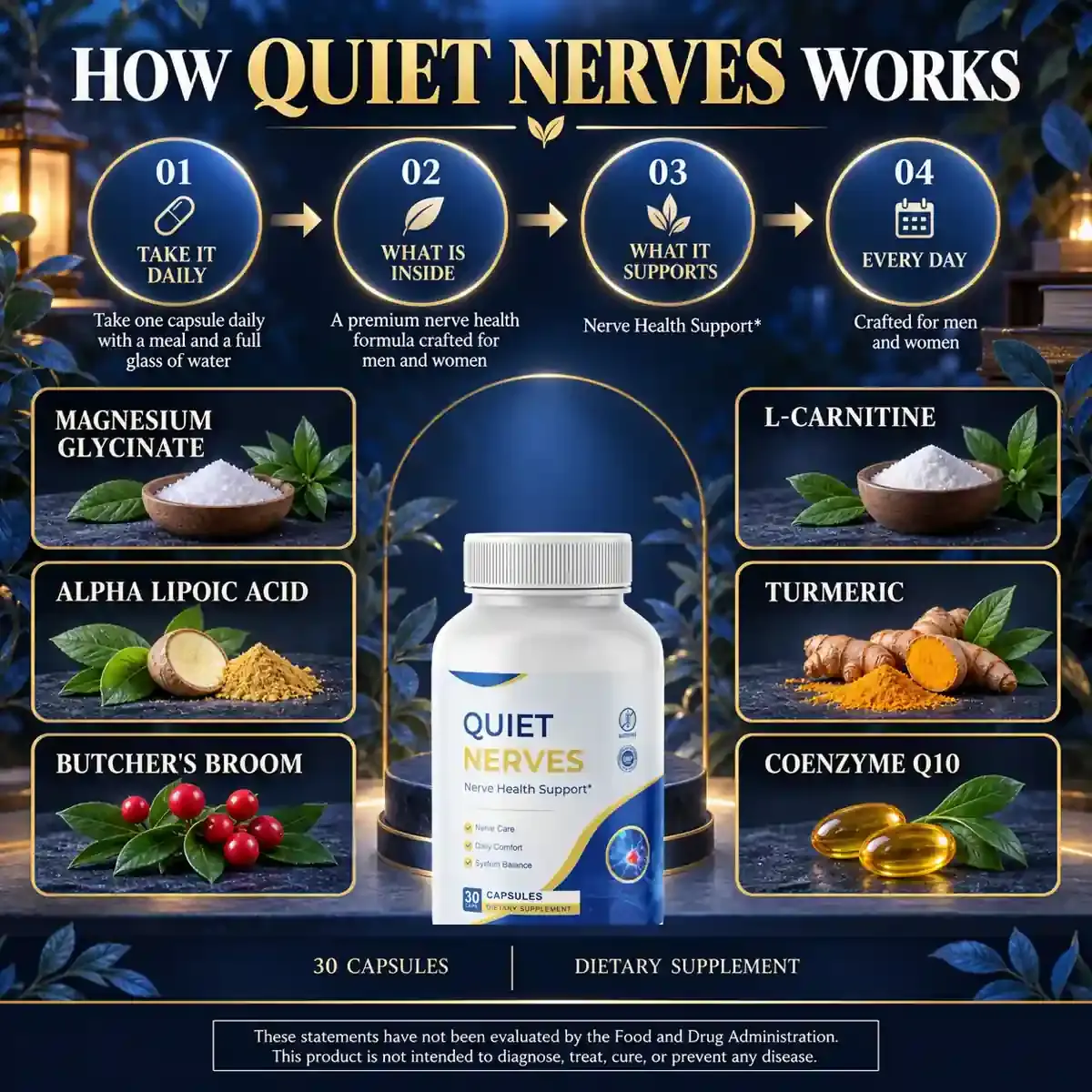
Quiet Nerves ingredients are magnesium glycinate, alpha lipoic acid, butcher's broom, L-carnitine, turmeric (95% curcuminoids) and coenzyme Q10, and the brand publishes no amount for any of them. Studies used 600 mg of alpha lipoic acid, 1,500 to 3,000 mg of acetyl-L-carnitine, 400 mg of CoQ10 and 80 mg of nano-curcumin a day. The label names plain L-carnitine and a 95% turmeric extract, not the tested forms.
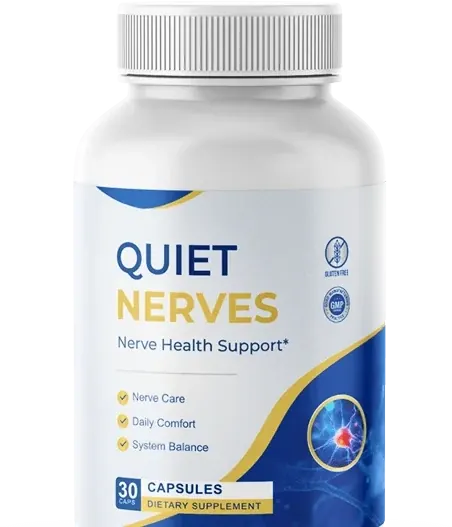
Quiet Nerves names six ingredients and prints no amount for any of them. Below, each one sits next to the dose that human studies used, with a link to the source. We also cover two places where the form on the label is not the form that was tested, and the questions worth putting to the brand.
Label
What does the Quiet Nerves bottle tell you about doses?
It tells you nothing about doses. The front reads QUIET NERVES, Nerve Health Support, 30 Capsules and Dietary Supplement, and no Supplement Facts panel was supplied.
A Supplement Facts panel is the box on a US supplement that lists how much of each ingredient one serving holds. It is the only place a buyer can check a dose, and it is missing here.
The brand's directions are one capsule each day, alongside a meal and a full glass of water. So whatever is in the formula has to fit in a single capsule.
- Serving
- 1 capsule a day (brand directions)
- Capsules per bottle
- 30
- Amount of each ingredient
- Not published
- Capsule weight
- Not published
- Other ingredients
- Not published
- Label cautions
- Not published
Why
Why do missing ingredient amounts matter?
Missing amounts matter because a study result only applies at the dose that was tested. With no numbers, you cannot tell whether a capsule holds a studied dose, a small fraction of one, or anything in between.
Studied doses add up fast
Take three of the six. The alpha lipoic acid trial used 600 mg a day (Ziegler et al., 2006), the carnitine trials used at least 1,500 mg a day (Sima et al., 2005), and the CoQ10 trial used 400 mg a day (Hernandez-Ojeda et al., 2012). That is 2,500 mg before magnesium, turmeric and butcher's broom get any room. Fitting studied doses of all six into one capsule would be hard.
Limits need numbers too
Magnesium from supplements has an upper limit of 350 mg a day for adults (NIH ODS, magnesium). If you already take a multivitamin or a magnesium product, you cannot add up your total without the label amount.
So does value
Packs work out to $1.63 to $2.63 a day. Without amounts, there is no way to compare that price with a single-ingredient product that prints its dose.
Doses
What doses did studies use for each Quiet Nerves ingredient?
The studied doses run from 80 mg for nano-curcumin to 3,000 mg for acetyl-L-carnitine. Alpha lipoic acid has the most human data, and butcher's broom has none for nerves.

Magnesium glycinate
No nerve dose has been proven. One small 8-week trial of 300 mg a day of magnesium citrate gave weak results (Ranjbar Arani et al., 2026). The supplement upper limit is 350 mg a day (NIH ODS, magnesium).
Alpha lipoic acid
The best-studied of the six. In SYDNEY 2, 600 mg a day by mouth for 5 weeks eased symptoms as well as 1,200 or 1,800 mg, and the higher doses brought more nausea (Ziegler et al., 2006).

Butcher's broom
Studied for heavy, swollen legs caused by vein problems, not for nerves. The single-ingredient trial ran 12 weeks in 148 women (Vanscheidt et al., 2002).
L-carnitine
Nerve trials used acetyl-L-carnitine at 1,500 to 3,000 mg a day for up to a year (Sima et al., 2005). Cochrane reviewers called the evidence very uncertain (Rolim et al., 2019 (Cochrane)).
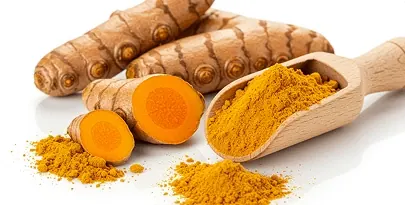
Turmeric (95% curcuminoids)
One small trial gave 80 mg of nano-curcumin, a high-absorption form, for 8 weeks (Asadi et al., 2019). No nerve trial of a standard 95% extract was found.
Coenzyme Q10
One small trial of 49 people with type 2 diabetes used 400 mg a day for 12 weeks (Hernandez-Ojeda et al., 2012). Scores improved within the CoQ10 group.
One caution belongs here. Memorial Sloan Kettering advises people with diabetes not to take butcher's broom, after a reported case of diabetic ketoacidosis (MSK, butcher's broom). Diabetes is also the leading cause of peripheral neuropathy in the US (NINDS, peripheral neuropathy), so this point touches many buyers.
Every ingredient has a longer entry on the Quiet Nerves ingredients page.
Forms
Where do the carnitine and curcumin forms differ from the research?
Two of the six are not the form that was tested. The label says L-carnitine, while the nerve trials used acetyl-L-carnitine, and the turmeric trial used nano-curcumin rather than a standard 95% extract.
L-carnitine is not acetyl-L-carnitine
Acetyl-L-carnitine is a related but separate form. The large trials that analyzed 1,257 people used it at 500 or 1,000 mg three times a day (Sima et al., 2005). Only the higher dose eased pain, and nerve test results did not improve at either dose. A second review of four trials found lower pain scores but warned that the trials were few and mostly funded by a maker (Li et al., 2015). No neuropathy trial of plain L-carnitine was found, so these results should not be assumed to carry over.
A 95% curcuminoid extract is not nano-curcumin
The only nerve trial of curcumin used 80 mg of nano-curcumin, a form made to be absorbed more easily (Asadi et al., 2019). Quiet Nerves lists turmeric at 95% curcuminoids, per the info page, and does not say whether it uses a high-absorption form. That detail matters for safety as well: liver damage has been reported with high-absorption curcumin products (NCCIH, turmeric).
Want to judge Quiet Nerves yourself? Every pack comes with a 60-day money-back guarantee.
Prices from $49 a bottle. Free US shipping on every pack.
Side by side
How do all six Quiet Nerves ingredients compare with the research?
Every row gives the same answer for Quiet Nerves: not published. The other columns show what was tested, at what dose, and how strong the evidence is, so you know which number to ask for.
| Ingredient | Quiet Nerves amount | Form studied | Studied dose | Evidence for nerves |
|---|---|---|---|---|
| Magnesium glycinate | Not published | Magnesium citrate | 300 mg a day, 8 weeks (Ranjbar Arani et al., 2026) | Weak; one link study (Chu et al., 2016) |
| Alpha lipoic acid | Not published | ALA by mouth | 600 mg a day, 5 weeks (Ziegler et al., 2006) | Best of the six; oral gains modest (Mijnhout et al., 2012) |
| Butcher's broom | Not published | Ruscus extract | 12 weeks, for leg veins (Vanscheidt et al., 2002) | None found |
| L-carnitine | Not published | Acetyl-L-carnitine | 1,500 to 3,000 mg a day (Sima et al., 2005) | Very uncertain (Rolim et al., 2019 (Cochrane)) |
| Turmeric (95% curcuminoids) | Not published | Nano-curcumin | 80 mg, 8 weeks (Asadi et al., 2019) | One small trial |
| Coenzyme Q10 | Not published | CoQ10 (ubiquinone) | 400 mg a day, 12 weeks (Hernandez-Ojeda et al., 2012) | One small trial |
No study of Quiet Nerves itself, or of this six-ingredient mix, was found. Each result above comes from one ingredient given alone at a known dose.
Ask
What should you ask the Quiet Nerves brand before you buy?
Ask for the Supplement Facts panel first, since it answers most other questions at once. Then work through the follow-ups below.
The amount of each ingredient
Milligrams per capsule for all six, not a single blend total, so you can set them against the table above.
The carnitine form
Plain L-carnitine or acetyl-L-carnitine. The nerve trials used the acetyl form.
The turmeric form
A standard 95% extract or a high-absorption form, and how many milligrams of curcuminoids each capsule holds.
The butcher's broom extract
The extract strength and amount, since the leg vein trials used a set extract dose.
A lab report for your lot
A certificate of analysis from a named lab. Lot QUI-26/GO-5936 and QUI-5936-26-GO on this site are reference labels, not lab proof.
Cautions and other ingredients
The capsule shell, any fillers, and the warnings the label carries.
Put these questions to the order desk by phone or email. Keep written answers with your order email. If a panel is released, it will appear on the Quiet Nerves Supplement Facts page.
Verdict
So what can the ingredient list tell you?
It tells you which ingredients to read about, not whether any of them reaches a studied dose. Alpha lipoic acid has the strongest data, two ingredients differ in form from the trials, and butcher's broom has no nerve research at all.
What you can judge now are the buying terms. There is no 1-bottle pack, the smallest order is 2 bottles for $158, and every pack has a 60-day money-back window from purchase. The 6-bottle pack lasts 180 days, longer than that window. Compare packs on the Quiet Nerves pricing page.
To weigh any product in this category, use our guide to choosing a nerve support supplement.
FAQ
Quiet Nerves ingredients: frequently asked questions
What are the Quiet Nerves ingredients?
Six are named: magnesium glycinate, alpha lipoic acid, butcher's broom, L-carnitine, turmeric (95% curcuminoids) and coenzyme Q10.
How much of each Quiet Nerves ingredient is in a capsule?
None of the amounts are published. Without a Supplement Facts panel, no dose can be compared with research.
Does Quiet Nerves contain vitamin B12?
No. Vitamin B12 is not one of the six named ingredients. A low B12 level is checked with a blood test.
Which Quiet Nerves ingredient is best studied?
Alpha lipoic acid. In SYDNEY 2, 600 mg a day by mouth for 5 weeks eased nerve symptoms in diabetes.
Written and checked by the Quiet Nerves Editorial Desk at Goquietnerves.
Sources