Ingredient check
Why Is Butcher's Broom in a Nerve Supplement? Circulation, Leg Veins and a Diabetes Warning
Quick answer
The brand does not say why butcher's broom is in Quiet Nerves, but it most likely backs the circulation line. Trials studied it for heavy, swollen legs from vein trouble, not for nerves. Memorial Sloan Kettering advises people with diabetes not to take it, which matters because diabetes is the leading US cause of nerve damage.
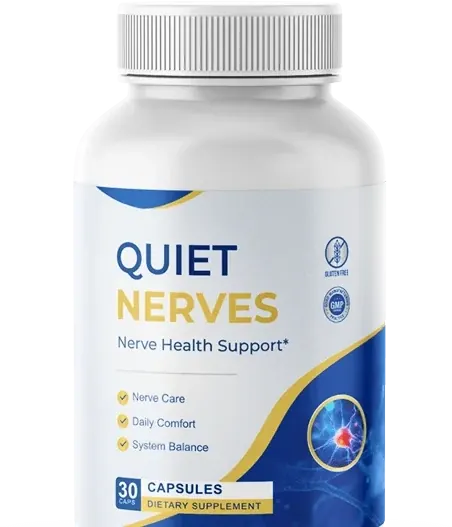
Of the six names on the Quiet Nerves list, butcher's broom is the odd one out. Five ingredients have at least some nerve research behind them. This one has none. It is there for a different reason, and it also carries the sharpest warning of the six.
This post explains what the plant is, what it was tested for, why that does not equal a nerve benefit, and who should ask a doctor first.
Key facts
- Butcher's broom (Ruscus aculeatus) is a small shrub native to Europe. Extracts come from the root.
- A 12-week trial in 148 women with vein trouble found less leg swelling and less heaviness than placebo.
- A pooled look at 31 trials of a combination product used 150 mg of Ruscus extract per capsule.
- We found no nerve-symptom trial of butcher's broom.
- People with diabetes are told to avoid it, because of one reported case of diabetic ketoacidosis.
- The amount of butcher's broom in Quiet Nerves is not published.
Basics
What is butcher's broom?
It is a small shrub native to Europe. Its Latin name is Ruscus aculeatus. Supplement makers use an extract of the root.
No trial has tested it as a nerve herb. Keep that in mind, because its place on a nerve label can suggest otherwise.
Purpose
Why would a nerve formula contain butcher's broom?
The brand does not explain. The likeliest link is the sales line about encouraging healthy circulation, since the plant's research is all about blood flow in the legs.
That makes sense as marketing logic: nerves are fed by tiny blood vessels, so a circulation herb sounds helpful. The logic is plausible. It is not a measured result.
Trials
What did the butcher's broom trials test?
Both pieces of research we cite deal with chronic venous insufficiency, which means leg veins that struggle to return blood to the heart.
| Study | Who and how long | What was found |
|---|---|---|
| Placebo-controlled trial | 148 women, 12 weeks, Ruscus extract | Less swelling in the lower leg and less heavy, tired legs than placebo (Vanscheidt et al., 2002) |
| Pooled analysis | 31 trials of a combination product with 150 mg of Ruscus extract per capsule | Modest drops in leg pain, cramps and heaviness (Boyle et al., 2003) |
Notice what is missing. Nobody in these trials was studied for numb or tingling hands or feet.
Gap
Is better blood flow in leg veins the same as healthier nerves?
No. Veins carry blood back toward the heart. Nerves carry signals. A herb that eases heavy legs has not been shown to change how nerves behave.
This is why we say the evidence for nerves is none. The brand's circulation line is a goal, and the supporting trials answer a neighboring question.
Hands
Will a circulation herb help hands that go numb at night?
Nothing we cite says so. The butcher's broom trials were about legs. If your hands go numb or tingle in bed, the useful step is a doctor visit, because causes such as diabetes and low vitamin B12 have their own care (NINDS, peripheral neuropathy).
A supplement should come after that visit, not in place of it.
Safety
Why are people with diabetes told to avoid butcher's broom?
Memorial Sloan Kettering tells people with diabetes to avoid the herb. The reason is one reported case of diabetic ketoacidosis, a harmful build-up of acids in the blood (MSK, butcher's broom).
Reported side effects of the plant are diarrhea and skin reactions.
Quiet Nerves
What does Quiet Nerves publish about its butcher's broom?
Only the name. The amount, the plant part and any standard strength are not printed. The brand says nothing about why it chose the herb.
| Item | What is published |
|---|---|
| Six ingredients named | Coenzyme Q10, turmeric (95% curcuminoids), L-carnitine, butcher's broom, alpha lipoic acid and magnesium glycinate |
| Amount of each one | Not published |
| Study of Quiet Nerves itself | Not published; none was found |
| Label cautions and storage directions | Not published |
| FDA status | Not FDA approved. The FDA does not approve dietary supplements |
Next steps
What should you do before taking a capsule that contains it?
- Tell your doctor or pharmacist that the capsule contains butcher's broom.
- Say clearly if you have diabetes, or if anyone has ever told you your blood sugar runs high.
- Keep the 60-day refund window in mind if you decide to try it.
- Stop and call a doctor if you feel unwell after starting.
FAQ
Frequently asked questions
Why is butcher's broom in a nerve supplement?
The brand does not say. It most likely backs the circulation line, since the plant was studied for heavy, swollen legs from vein trouble.
Does butcher's broom help nerves?
We found no trial of it for nerve symptoms. Its research covers leg veins only.
Is butcher's broom safe for people with diabetes?
Memorial Sloan Kettering tells people with diabetes to avoid it, citing one reported case of diabetic ketoacidosis.
What are the side effects of butcher's broom?
Reported ones are diarrhea and skin reactions.
How much butcher's broom is in Quiet Nerves?
Not published. The label names the herb and gives no amount.
Can butcher's broom fix hands that go numb at night?
Nothing cited shows that. Numb hands need a doctor visit first, because the cause decides the care.
Sources
Which sources does this post rely on?
Each source below is one that the Quiet Nerves site already cites. The links open the original pages.
- MSK, butcher's broom. Memorial Sloan Kettering Cancer Center. About Herbs: Butcher's Broom. Updated April 13, 2023.
- Vanscheidt et al., 2002. Vanscheidt W, et al. Efficacy and safety of a Butcher's broom preparation compared to placebo in chronic venous insufficiency. Arzneimittelforschung. 2002;52(4):243-250.
- Boyle et al., 2003. Boyle P, et al. Meta-analysis of clinical trials of Cyclo 3 Fort in the treatment of chronic venous insufficiency. Int Angiol. 2003;22(3):250-262.
- NINDS, peripheral neuropathy. National Institute of Neurological Disorders and Stroke. Peripheral Neuropathy. Last reviewed March 13, 2026.
- NCCIH, using supplements wisely. National Center for Complementary and Integrative Health. Using Dietary Supplements Wisely. Last updated January 2019.
- FDA, dietary supplements Q and A. U.S. Food and Drug Administration. Questions and Answers on Dietary Supplements. Content current as of August 27, 2026.
Our view
Our view
Why is butcher's broom in a nerve supplement? Because it fits a circulation story, not because it has nerve proof. That is worth knowing before you read the rest of a label.
For readers without diabetes, the herb is one more unknown amount. For readers with diabetes, it is a clear reason to ask a doctor before the first capsule.
Last updated . Written by the Quiet Nerves Editorial Desk at Goquietnerves. Medically reviewed by Dr. Eric Roberts, DPM, Podiatrist. This is general information, not medical advice. Quiet Nerves is a dietary supplement, not FDA approved, and not a treatment for neuropathy or any disease. Ask your own doctor or pharmacist about your own health and medicines.